
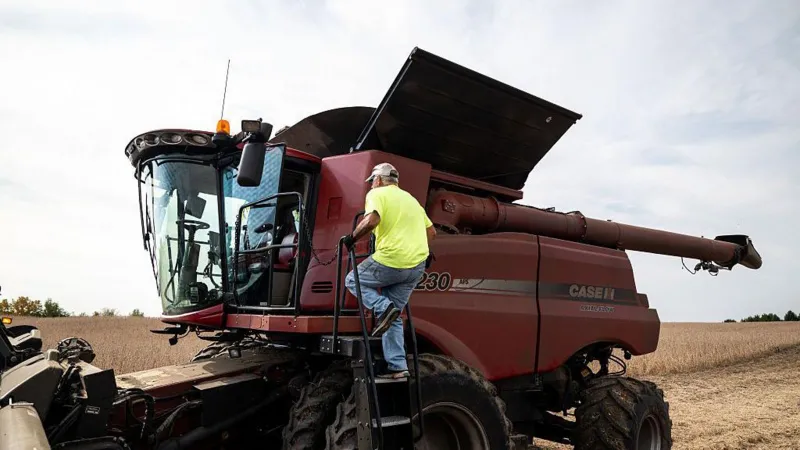
Washington, D.C. — President Donald Trump has announced a $12 billion farm aid package designed to help American farmers struggling with low crop prices and ongoing trade disputes that have disrupted key export markets, especially China.
The plan includes $11 billion in direct, one-time payments for row-crop farmers under the USDA’s Farmer Bridge Assistance Program, with another $1 billion reserved for specialty crops not covered by the main program.
The announcement was made at the White House alongside Treasury Secretary Scott Bessent, Agriculture Secretary Brooke Rollins, members of Congress, and farmers representing major crop sectors including corn, cotton, soybean, wheat, sorghum, rice, potatoes, and cattle.
Here’s What Canadian Provinces Are Doing With All the US Liquor Pulled Off Shelves↗
Why the Aid Package Was Announced
The White House said the package is intended to help farmers recover from “years of unjustified trade actions,” global market instability, and persistent inflation that has driven up production costs.
Farmers have traditionally been strong supporters of Trump, but his second-term trade policies — particularly with China — have caused financial strain across much of the agriculture sector.
During the event, Trump emphasized that supporting farmers is essential to lowering food costs in the U.S.:
“Maximizing domestic farm production is a big part of how we will make America affordable again and bring down grocery prices.”
China Trade Dispute Hits Farmers Hard
Sorghum and soybean farmers have been among the hardest hit by the trade war. China — the largest global buyer of U.S. soybeans — reduced purchases sharply after the Trump administration imposed new tariffs earlier this year.
Some farmers said they lost access to the Chinese market for months.
A White House official explained that the new payments act as a “bridge” to help farmers market their 2025 harvest and make planting decisions for 2026 while the administration works to create a “better market environment.”
Trump Threatens Additional Tariffs on Mexico
On the same day, Trump threatened to impose a new 5% tariff on Mexico, accusing the country of violating an 80-year-old water treaty that provides water from Rio Grande tributaries to U.S. farmers.
“It is very unfair to our US Farmers who deserve this much needed water,” Trump posted on social media.
Water-sharing disputes between the two countries have been ongoing for decades.
Farmers React: Helpful, But Not a Long-Term Fix
Farmers at the announcement shared mixed reactions. Many said the aid will help them cover immediate costs but will not solve long-term economic problems.
Mark Legan, a corn, soybean, and livestock farmer from Indiana:
- Said the aid could help him replace aging equipment.
- Noted that record-high costs for chemicals, seeds, and machinery remain a major challenge.
- Added that export markets still have not fully recovered from the trade war.
Brad Smith, a farmer from Illinois, said:
- Farmers don’t love the idea of government aid, but most can’t afford to turn it down.
- Any funds he receives will be used almost immediately to pay bills and buy next year’s seeds and fertilizer.
- There have been past issues with larger farms receiving disproportionate aid compared to smaller ones.
Previous Trump-Era Farm Aid
This is not the first time the administration has intervened. During Trump’s first term, the federal government released:
- $22 billion in aid (2019)
- $46 billion in 2020, including pandemic assistance
China’s New Purchase Commitments
Following Trump’s October meeting with Chinese President Xi Jinping in South Korea, China reportedly committed to purchasing:
- 12 million metric tonnes of U.S. soybeans before the end of 2025
- 25 million tonnes annually for the next three years
So far, China has purchased only about one-quarter of its 2025 commitment, though recent buying activity has accelerated.
Treasury Secretary Bessent said he expects China to meet the target by late February.
He also noted:
“The Chinese actually used our soybean farmers as pawns in the trade negotiations. We are going to create this bridge because agriculture is all about the future.”
What Happens Next
The USDA will begin distributing payments in the coming weeks. Trump said additional aid packages may be considered depending on market conditions:
“The farmers don’t want aid. They want a level playing field.”
This announcement comes as U.S. voters increasingly express concern over rising grocery prices, with the administration framing the aid package as part of a broader strategy to stabilize food costs and strengthen national food security