
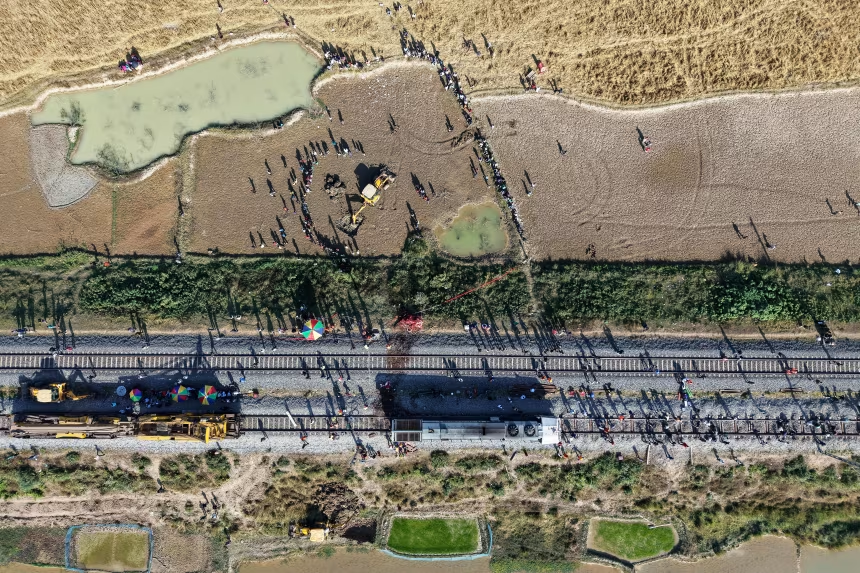
A high-speed passenger train struck a herd of wild elephants in India’s northeastern state of Assam, killing seven Asiatic elephants and injuring a calf early Saturday, local authorities confirmed.
The tragic incident occurred when a herd of approximately 100 elephants was crossing railway tracks in a forested region of Changjurai village, about 125 kilometers southeast of Guwahati, the state capital.
US Seizes Second Oil Tanker Off Venezuela’s Coast Amid Escalating Tensions↗
Train Driver Applied Emergency Brakes, Officials Say
According to Indian Railways, the driver of the Rajdhani Express spotted the elephants on the tracks and immediately applied emergency brakes. Despite the effort, the train was unable to stop in time and struck several animals.
Indian Railways spokesperson Kapinjal Kishore Sharma told the Associated Press that the impact caused five coaches and the engine to derail, though no passengers were injured.
No Human Casualties Reported Among 650 Passengers
The Rajdhani Express was traveling from Sairang in Mizoram, near the Myanmar border, to New Delhi, carrying around 650 passengers at the time of the collision.
Railway officials said the undamaged coaches were separated, allowing the train to continue its journey. About 200 passengers from the derailed coaches were transferred to Guwahati on a separate train.
Veterinarians Conduct Autopsies on Dead Elephants
Forest officials confirmed that veterinarians conducted post-mortem examinations on the deceased elephants. The carcasses were later buried near the accident site, while the injured calf was treated by wildlife experts.
Authorities said the location was not officially marked as an elephant corridor, although elephants are frequently seen crossing railway tracks in the region.
Assam Faces Ongoing Elephant-Train Collisions
Assam is home to an estimated 7,000 wild Asiatic elephants, one of the highest populations in India. Collisions between speeding trains and elephants are not uncommon in the state.
Since 2020, at least a dozen elephants have been killed in similar train accidents across Assam, raising concerns about railway safety measures in wildlife-prone zones.
Seasonal Human-Elephant Conflict Adds to Risk
Wild elephants often move closer to human settlements during the harvest season, particularly when rice fields are ready for harvesting. These movements increase the risk of encounters with infrastructure such as highways and railway lines.
Conservationists have repeatedly called for speed restrictions, better surveillance, and early warning systems in elephant movement areas to prevent further loss of wildlife.
Conclusion
The death of seven elephants in Assam highlights the growing conflict between expanding transportation networks and wildlife habitats in India. While no human lives were lost, the incident underscores the urgent need for stronger safety measures, improved monitoring of elephant movement, and better coordination between railway authorities and forest departments to prevent such tragedies in the future.