
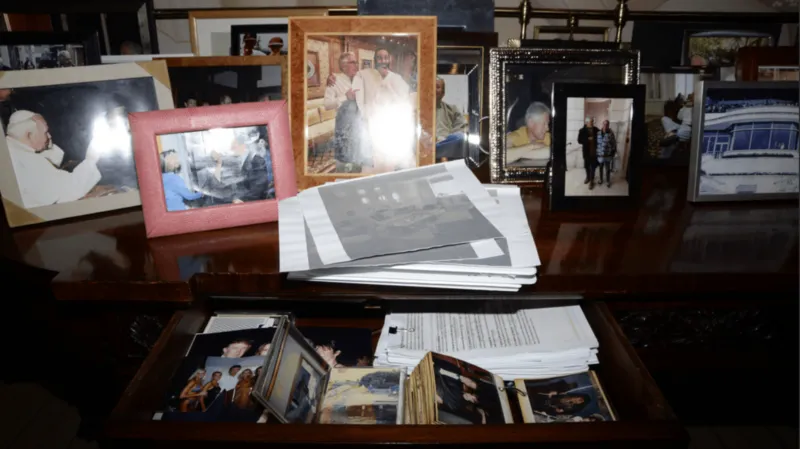
At least 13 photographs were removed from the US Department of Justice website hosting the newly released Jeffrey Epstein files, prompting questions from lawmakers and the public about transparency. The removals occurred within a day of the files being published online, without an initial public explanation.
Deputy Attorney General Todd Blanche later confirmed that the images were taken down after concerns were raised by victims and victims’ rights groups.
Bangladesh Hindu Man Lynched Over Alleged Blasphemy With No Witnesses, Probe Reveals↗
Photo Including Donald Trump Briefly Removed, Then Restored
Among the removed files was a photograph showing former President Donald Trump alongside Jeffrey Epstein, Melania Trump, and Epstein associate Ghislaine Maxwell. The DOJ said the image was flagged by the Southern District of New York for further review to ensure no Epstein victims were depicted.
The department stated that the image was removed temporarily “out of an abundance of caution.” After review, officials said there was no evidence that any victims appeared in the photo, and it was restored without redactions by early Sunday.
Blanche dismissed claims that the image was removed to protect Trump, calling such accusations “laughable.” He told NBC News that numerous photos of Trump with Epstein have already been publicly available for years.
Democrats Question Transparency and File Removal
Democrats on the House Oversight Committee raised concerns about the disappearance of the images. In a social media post, they questioned Attorney General Pam Bondi, asking, “What else is being covered up?”
The committee later reposted the missing image online, calling for full transparency for the American public.
As of Sunday evening, the other removed files had not yet been restored to the DOJ website.
Details of the Missing Epstein Files Images
Ten of the missing files reportedly depict what appears to be the same room inside Epstein’s home, described as a small massage parlour with clouds painted on the ceiling and walls covered with artwork and photographs of nude women.
While many faces in the images were redacted, reports noted inconsistencies. In some files, a woman’s face appeared redacted in one image but clearly visible in others. Another face reportedly remained unredacted across multiple images, raising concerns about victim privacy.
DOJ Under Fire for Delayed and Redacted Release
The Justice Department has already faced criticism for failing to fully release all Epstein-related files by the Friday deadline mandated by Congress. The release followed legislation requiring the DOJ to make the documents public in their entirety.
The DOJ said it complied with the law while redacting sensitive material, including personally identifiable information about victims, child sexual abuse material, records involving physical abuse, documents tied to active investigations, and classified national security information.
However, many of the released files were heavily redacted, and critics say they contain little new information about Epstein’s crimes.
Lawmakers Demand Accountability
Republican Congressman Thomas Massie of Kentucky, who led the push to release the Epstein files, expressed frustration with the DOJ’s handling of the documents. He said he is drafting inherent contempt charges against Attorney General Pam Bondi.
Massie told CBS News that he would not be satisfied until Epstein survivors themselves are satisfied, adding that the DOJ’s actions were “very troubling.”
Conclusion
The removal of at least 13 images from the Epstein files has intensified public suspicion and political scrutiny surrounding the government’s handling of one of the most controversial document releases in recent years. While the DOJ insists the removals were driven by victim protection and legal caution, lawmakers from both parties continue to demand full transparency. As pressure mounts, questions remain about what information is still being withheld and whether the Epstein files released so far truly meet the intent of the law.