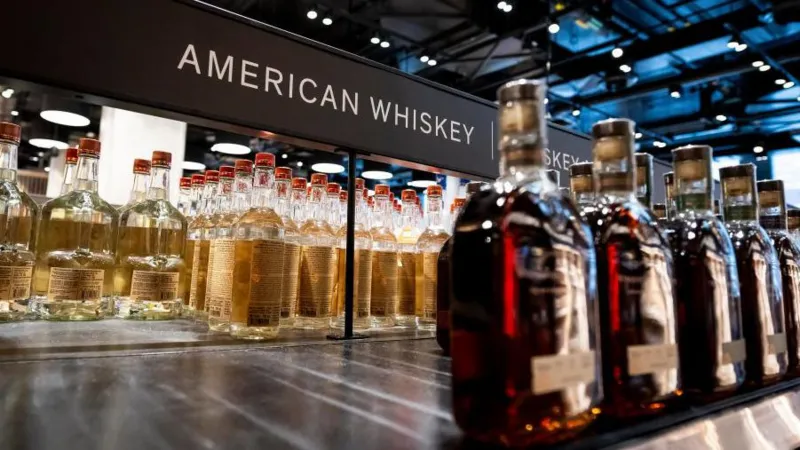
Canadian provinces are facing an unusual challenge: what to do with millions of dollars’ worth of American alcohol that has been sitting in storage since early 2025. The products were pulled from shelves in February as part of a nationwide boycott over US tariffs — and now, with most provinces no longer selling US liquor, stock rooms are overflowing.
As of December, only two out of ten provinces — Alberta and Saskatchewan — continue to sell American-made booze, thanks to their fully privatized liquor retail systems. For the rest of Canada, the question remains: keep it, sell it, or pour it out?
Why the Liquor Was Pulled
The boycott began in February after former US President Donald Trump imposed broad tariffs on Canadian goods, re-igniting trade tensions. Although many tariffs were later waived due to long-standing North American trade agreements, key sectors — including lumber, metals, and automotive goods — remain affected.
In protest, most Canadian provinces ordered US alcohol removed from shelves. Months later, the liquor is still piling up.
Manitoba and Nova Scotia Donate Proceeds to Charity
Both Manitoba and Nova Scotia announced that they will sell their remaining US liquor inventory — valued at C$17.4 million — and donate all proceeds to charity.
Nova Scotia, which restocked its US liquor shelves last week, reported higher-than-usual sales, with Kentucky bourbon leading the list, according to liquor board spokesperson Terah McKinnon. The province expects to generate around C$4 million, which will be donated to Feed Nova Scotia and local food banks.
Premier Tim Houston emphasized that the goal is to prevent products from expiring and going to waste. Once inventory sells out, Nova Scotia will not be ordering additional US alcohol.
Following Nova Scotia’s announcement, Manitoba declared that it would also begin selling off its remaining US products, beginning Monday. Municipal Relations Minister Glen Simard said removing US liquor was “the right thing to do,” but added that the province wants to avoid letting products expire unused.
Quebec: From Potential Destruction to Donations
Quebec’s liquor board revealed in August that it might have to destroy C$300,000 worth of expiring US liquor, sparking public criticism. In response, the province’s finance minister later announced that soon-to-expire products would instead be donated to charity events and hospitality schools.
Quebec has an estimated C$27 million in American alcohol currently sitting in storage.
British Columbia Sells to Bars and Restaurants
British Columbia has taken a different route, confirming that it has offloaded its US liquor inventory to bars and restaurants, rather than putting the products back on public shelves.
Ontario Sitting on C$80 Million of US Booze
Ontario — the largest player in Canada’s liquor market — has offered no clear plan for its massive stockpile. The LCBO reportedly holds C$80 million ($57.7 million USD) worth of American alcohol, and some of it is approaching expiration.
Finance Minister Peter Bethlenfalvy stated in November that Ontario intends to maintain the boycott until Canada secures a “tariff-free or low-tariff deal” with the US. Only about C$2 million worth of inventory is expected to expire soon, he said.
Newfoundland and Labrador Also Silent
Newfoundland and Labrador have not publicly outlined a plan for their significant US liquor stockpile.
Impact on US Liquor Producers
The boycott is not going unnoticed in the United States.
US Ambassador to Canada Pete Hoekstra said the alcohol ban has become an irritant in ongoing trade discussions, even claiming that it contributed to the Trump administration labeling Canada as “mean and nasty.”
The Distilled Spirits Council of the United States (DISCUS) reports that exports to Canada have plunged by 85%, contributing to troubling declines in other markets as well.
CEO Chris Swonger said US liquor producers hope trade tensions can be resolved so that American spirits can return to Canadian shelves soon.
1 thought on “Here’s What Canadian Provinces Are Doing With All the US Liquor Pulled Off Shelves”