
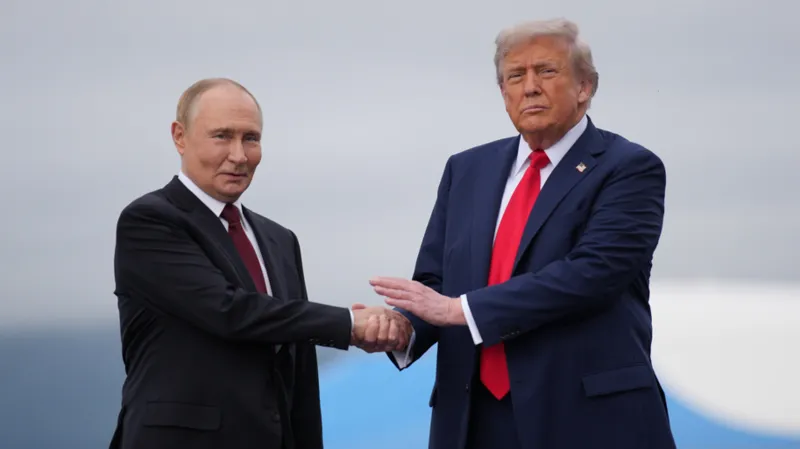
Russia has openly praised US President Donald Trump’s new National Security Strategy, calling the document “largely consistent” with the Kremlin’s long-held vision.
Kremlin spokesperson Dmitry Peskov told state media that Moscow views the new approach as a “positive step,” noting that Russia will continue analyzing the full document before making formal conclusions.
Mark Zuckerberg Plans 30% Budget Cuts for Metaverse Projects, Layoffs Expected
A Shift in US Stance Toward Russia
The updated 33-page US strategy uses noticeably softer language toward Russia. Unlike previous editions, it does not identify Russia as a primary threat.
Instead, it emphasizes restoring “strategic stability” with Moscow as a way to “stabilize European economies.”
European officials fear this shift could weaken the West’s unified stance on the war in Ukraine.
EU Officials Raise Alarms Over “Civilisational Erasure” Claims
The strategy warns that Europe faces the threat of “civilisational erasure” within the next 20 years. It argues that several European nations may struggle to maintain strong economies and militaries.
EU leaders strongly pushed back, describing the document’s tone as unusually aligned with Kremlin-style rhetoric.
Focus on Migration, Free Speech, and Influence in Europe
The strategy highlights several priorities, including:
- Combatting foreign influence
- Ending mass migration
- Rejecting perceived EU “censorship”
- Encouraging “patriotic European parties”
It also suggests that the US should support policy movements resisting Europe’s “current trajectory.”
Concerns Over US–EU Relations
As the EU and the Trump administration negotiate a Ukraine peace framework, European leaders stressed the importance of maintaining a strong transatlantic partnership.
German Foreign Minister Johann Wadephul called the US an “indispensable ally” but questioned why issues of free expression were included in a national security strategy.
Polish Prime Minister Donald Tusk reminded the US that Europe is its “closest ally, not its problem,” urging unity against “common enemies.”
Far-Right Influence and Global Policy Shifts
Critics, including former Swedish Prime Minister Carl Bildt, argue that the new US strategy aligns closer to “the extreme right.”
Analysts note the Trump administration’s increased engagement with far-right groups in Europe, including Germany’s AfD, labeled “extreme right” by German intelligence.
Expanded US Military Priorities
The strategy includes new global commitments:
- Possible military action to target drug-trafficking operations in the Caribbean and eastern Pacific
- Increased pressure on Venezuela
- Calls for greater defense spending from Japan, South Korea, Australia, and Taiwan
US Lawmakers Warn of Global Fallout
Several US Democratic lawmakers expressed concern that the new strategy could harm America’s global influence.
Representative Jason Crow warned it could be “catastrophic to America’s standing,” while Representative Gregory Meeks said it abandons decades of value-based foreign policy.
Conclusion
The Trump administration’s new National Security Strategy marks a significant shift in the US approach to global alliances and threats. While Russia welcomes the tone and direction, many European leaders and US lawmakers fear the long-term consequences for transatlantic unity, democratic values, and international stability. With geopolitical tensions high, the document signals a future where global power structures may continue to shift dramatically.
1 thought on “US National Security Strategy Draws Praise from Moscow, Sparks Concern in Europe”