
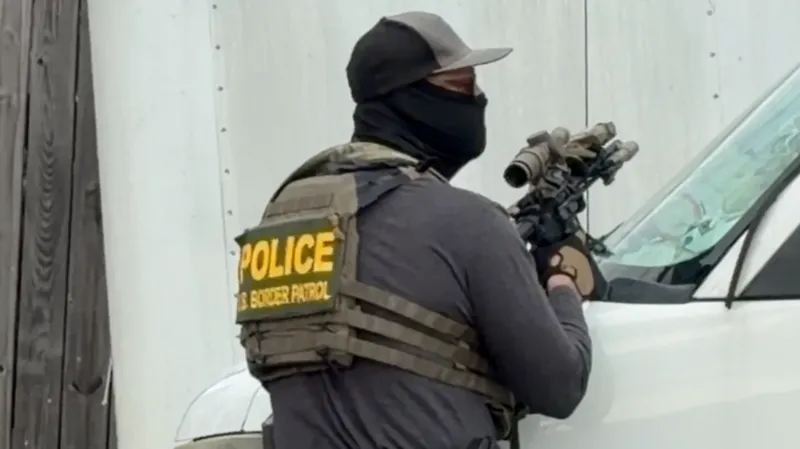
Residents in New Orleans, especially in predominantly Latino neighborhoods, are living in fear as a large-scale immigration enforcement operation unfolds. The Department of Homeland Security (DHS) has launched what it calls “Catahoula Crunch”, a new crackdown targeting undocumented migrants, marking the city as the latest focal point in President Trump’s aggressive immigration agenda.
Suspect Arrested in 2021 Capitol Riot Pipe Bomb Case↗
During one dramatic encounter in Kenner, Border Patrol agents climbed onto a rooftop to arrest two laborers who resisted capture. Snipers were positioned on the ground as neighbors and local media watched in shock. Activist Zoe Higgins, who witnessed the scene, described the situation as terrifying, saying the men were simply working to support their families.
DHS Claims Criminal Focus, but Questions Remain
According to DHS, the operation targets undocumented migrants with criminal allegations. Officials reported dozens of arrests in Louisiana, describing some detainees as individuals who had been released under so-called sanctuary city policies. However, leaked data from previous raids suggests that many detained migrants had no criminal record, raising concerns about the true scope of the operation.
DHS confirmed that at least one “illegal alien” was arrested in the rooftop standoff but did not clarify whether agents had a warrant or the immigration status of all individuals involved.
New Orleans Becomes Fourth Major Target in Trump’s Immigration Push
This operation marks the fourth major city targeted in Trump’s promised mass deportation effort, which he has described as the largest in U.S. history. Border Patrol commander Greg Bovino said his teams are focused on capturing the “worst of the worst” while patrolling on foot, by vehicle, and even by air.
Still, local officials question the operation’s scale. New Orleans City Council President JP Morrell said a sweep of the city would not yield anywhere close to the 5,000 wanted criminals that federal officials have suggested.
Latino Communities Retreat Indoors Amid Fear
In Kenner, many Latino residents are staying indoors, afraid to leave their homes. Abigail, whose family runs a long-standing Mexican restaurant, said her parents now sleep inside the restaurant out of fear of being caught in the raids. She worries about the safety of her family and her community, noting that immigrants play a central role in the local economy.
The fear is widespread across New Orleans and its suburbs. With an estimated 14 million undocumented people nationwide and 13% of New Orleans’ population being Hispanic, many are bracing for the possibility of detention or deportation.
Sanctuary City Debate Fuels Tension
Catahoula Crunch has reignited debates around sanctuary cities, which limit cooperation with federal immigration authorities. DHS claims that such policies allow dangerous individuals to remain in communities, while local leaders argue that these sweeps target ordinary families who contribute to the city.
Louisiana’s Republican Governor Jeff Landry supports the crackdown and has suggested that detainees could be held in Angola, the state’s largest maximum-security prison. The idea has sparked outrage among human rights advocates due to the prison’s troubled history and origins on former plantation grounds.
Mixed Reactions Among Trump Supporters
Across Lake Pontchartrain, in more conservative parts of Louisiana, views on the crackdown vary. Some residents agree that undocumented immigrants should be removed, while others say the situation is more nuanced. One Trump-supporting resident said she worries about separating families when some members may have legal status while others do not.
The mixed opinions reflect broader shifts within Trump’s base. Recent polling indicates declining approval of his handling of immigration and a drop in the number of Republicans calling for lower overall immigration levels.
Conclusion
The launch of Catahoula Crunch has plunged New Orleans into fear and uncertainty, highlighting deep national divisions over immigration policy. While federal officials frame the operation as a fight against crime, many residents and activists argue that families and workers are being unfairly targeted. As raids continue, tensions are rising, and communities are bracing for what may become one of the most controversial chapters in America’s modern immigration story.